Winter skiboot issues
The foot & skiboot
Your foot issue and the ski boot
As previously described, everyone’s feet are unique, but ski boots have a standard shape to which the foot must conform and adapt in order to minimize potential discomfort during your days on the slopes.
Learn more about your feet, common issues, and the solutions that TOTAL FEET offers for ski boots.
Reminder: Our feet support our entire body weight and enable us to move.
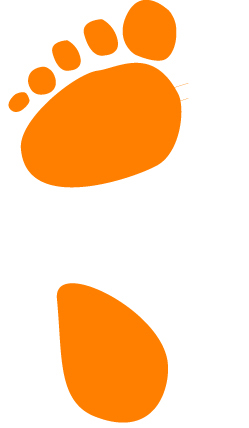
In a static stance, the foot rests on the ground at three points of contact, which are:
- the heel 50% of body weight
- the big toe 35% of body weight
- the base of the little toe 15% of body weight
In order to move and control our contact with the ground, each foot has three independent arches:
- The medial arch, which runs from the heel to the big toe. Its function is to stabilize the foot during movement, act as a shock absorber, and adapt to the terrain
- The lateral arch: which runs from the heel to the little toe. Its function is to serve as a guide rail during walking or running.
- The anterior arch: It is a transverse arch running from the big toe toward the little toe. It is a propulsive arch that enables the transition from one foot to the other
- Each foot works independently, based on sensations that sensors in the sole of the foot transmit to the muscles, and adapts instinctively and immediately (proprioception)
To put it simply the foot functions like your car’s universal joint, and the muscles of the arches are the springs in your shock absorbers.
Present situation
Take a look at those most affected:
Your feet: Examine their shape from every angle, starting at the toes
- Foot and toes: What is their shape—wide, medium, or narrow (“breadstick” shape)? Are they all the same length?
- The toes: Do they form an arc, or is the second toe longer than the big toe (Greek foot)
- The instep: wide, sloping inward, or arched and rigid. This is the problem for many skiers: as soon as you tighten the instep strap, your feet get cold (blood no longer circulates optimally) and you get cramps
The Ankle: Just like a car’s steering wheel, it must transmit angles and leg power while adapting to the terrain. Inside the shoe, it needs space, must be comfortably supported at the malleoli, and must not be compressed when pushing off or when the back of the shoe makes contact with the ground
What are your malleoli like: their shape—is one malleolus (internal or external) more prominent than the other? Is there a bony protrusion under the medial malleolus (“double malleolus”)
This indicates a weak foot that will tend to collapse when edging. This problem will tend to worsen over the course of the season as the foam in the inner liner compresses
Finally, the lower leg: either slim “chicken legs” or wide—even very wide—“chairlift poles.” This is the number one problem for women. The collar must be adjustable to ensure an even fit that won’t negatively affect how the heel sits in the boot. Fortunately, all manufacturers have adapted the design of their women’s boots (collar + lower section and flared shape) so as not to compromise the function of the muscles in the back of a woman’s leg.
The foot & skiboot
What kind of foot do you have?
Learn about your foot shape. When you step out of the shower or bathtub, look at the wet footprint you leave on the floor
There are three foot shapes:
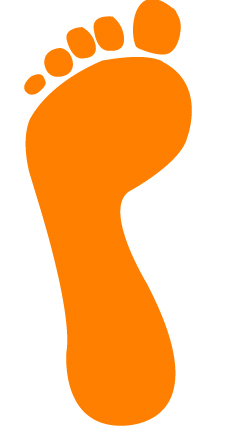
the normal foot
This is the typical foot shape found in Mediterranean countries (France, Spain, Italy, Austria, Germany, Belgium, etc.). The average size for men is generally between 39 and 42; for women, between 36 and 38. Its structure is rather narrow:
- A slender heel and a prominent, narrow Achilles tendon.
- A slender ankle with prominent medial and lateral malleoli
- A well-balanced musculature with a well-formed, flexible, and toned medial arch
- An instep that is generally slightly arched.
- A narrow or medium forefoot
This is the ideal foot for Italian loafers, the classic dress shoe style from the 1950s to the 1980s
problems... and their solutions
"My heel isn't secure in my skiboot"
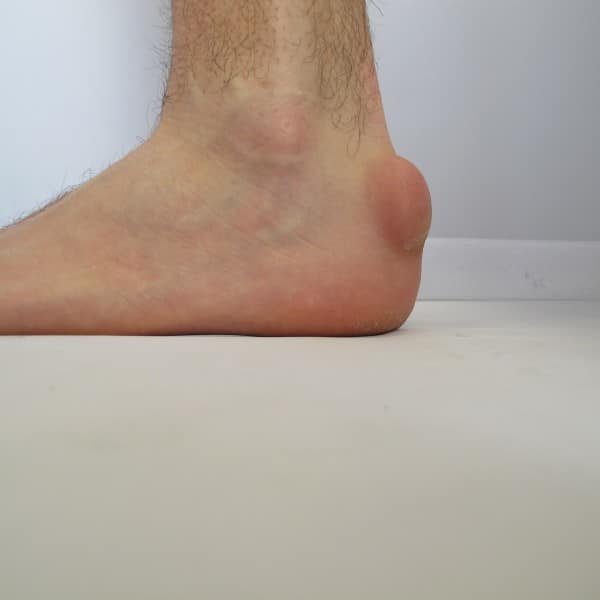
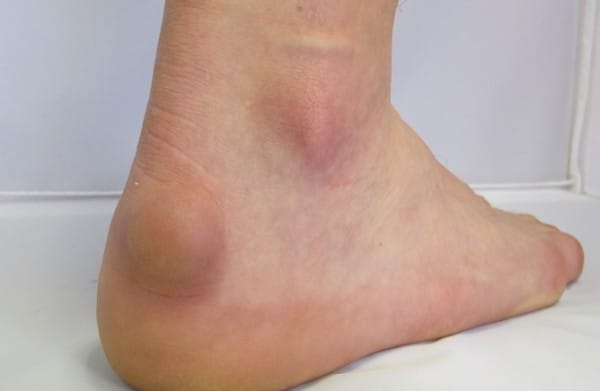
An unpleasant sensation of the bottom of the boot slipping away when leaning into turns or at high speeds = lack of control over the skis, difficulty edging the skis precisely. This problem isn’t limited to the heel; the malleoli also lack support against the liner padding. When tightening the cuff buckles, the foot tends to go numb. For people who ski more than 30 days per season, a lump may appear on the outer edge of the heel near the insertion of the Achilles tendon (bursitis).
Solution for heels that slip inside your ski or touring boots:
1-Check that the size of your ski boots matches your foot size: the store may have been a bit too generous with this critical choice. You may need to consider switching to a more appropriate boot model in the correct size
2-Have a custom insole made to evenly distribute pressure across the entire length of the foot and provide consistent, non-restrictive arch support. This is the first step: replace the original insole with a custom one
TOTAL FEET has developed new ski insoles with appropriate arch support.
3-Adapting the ski liner to your specific body type. This can be done on your original liner or with a custom-made liner—typically a thermo-moldable INTUITION liner for recreational skiers,
4- In cases of bursitis, a detailed examination of the inner volume of the shell will determine whether the shell needs to be expanded or whether a pressure-relief pad should be added to the inner liner (a common issue in alpine touring).
"the istep of my foot hurst when I buckle up the shell "
Compression on the instep:
As soon as you tighten the buckles on the instep and forefoot, your toes tend to go numb or get cold right away
Solution to prevent foot pain in your ski boots:
1- Make sure the size of your ski boots matches your foot size.
2- Improper tightening at the instep tends to restrict venous blood flow back to the upper body. The toe area suffers from this compression due to poor blood circulation, resulting in numbness and cold feet that set in very quickly.
Find your ideal buckle tightness.
Every morning, you should adjust the tightness of the lower buckles to ensure EVEN pressure on the instep. The buckles feature micrometric adjustment to allow for optimal tension control.
You can also adjust the length of the buckles’ sliders
Repeat this process in the early afternoon when the temperature has risen
3-Modification of the tongue structure. TOTAL FEET uses a professional shoemaker’s sewing machine to modify the internal structure of the tongue on your inner boots.
Custom-made insoles for skiing and a custom-made inner boot to relieve pressure on the medial part of the foot within the shell of the ski or hiking boot
“PAIN IN THE INNER ARCH OF THE FOOT”
The internal volume is adequate, the size is right, but cramps start to set in after about an hour of intense skiing. You have to loosen the buckles and wiggle your foot a bit to get it moving again.
Solution:
The shell may be a little too tight on your foot. This is common with performance or racing shells (anatomically shaped to fit the foot closely for greater responsiveness when engaging the edge)
1-Create a custom insole that is flexible at the inner arch to serve as a guide for the muscles of the 1st radius. This acts as a rolling arch
2-Rework the inner surface of the shell to provide a little more room
“I HAVE PAIN IN THE FOREFOOT WHEN I'M WEARING MY SKI BOOTS”
In a normal foot, this area of pain is generally very localized at the base of the little toe. A bony growth that is painful to the touch forms. This is the beginning of an exostosis. It is common among young skiers or professional snow sports athletes during the season. In the most advanced cases, a complete break from skiing for a period of 15 days to 1 month is necessary.
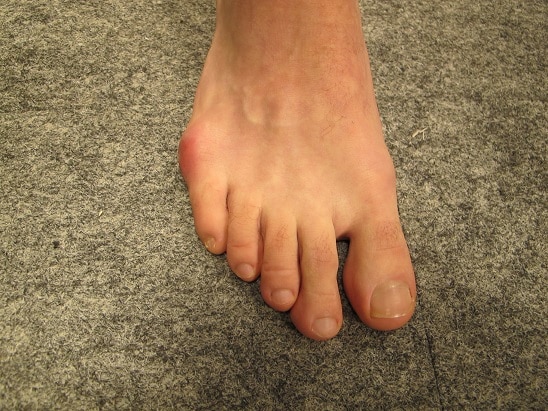
That’s what I call the “ski instructor’s bump,” because many instructors are the first to be affected by it. Unfortunately, these problems only arise during the month of January or at the end of the season, when mild temperatures naturally soften the shell.
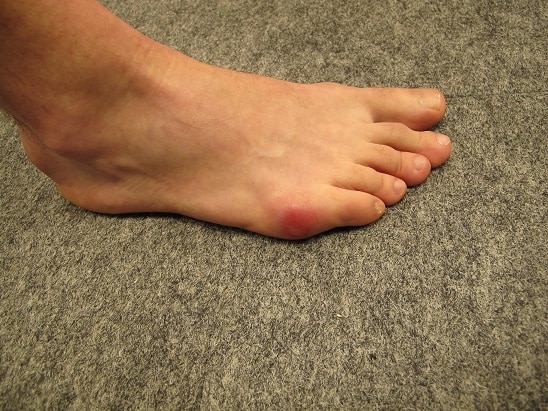
If your foot likes like this , It’s a bit too late
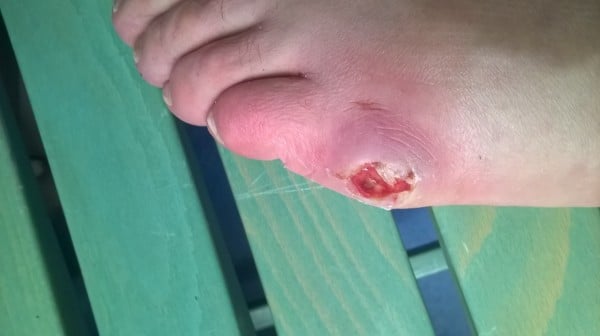
SO WE SWITCH TO “SURVIVAL” MODE
1- Sacrifice a pair of ski boots to finish out the season: Obviously, this involves the liner—cut a hole in the liner’s padding around the perimeter. + Deform the shell as much as possible in that specific area to fully free up that zone.
2- Ski instructor’s are recommended to use touring skiboot during theirs ski lessons
3- Visit a pharmacy or see a doctor for appropriate skin treatment
4- Spend as much time as possible barefoot, out of your ski boots, to promote healing
5- During the off-season, the affected area will have time to heal, and the skin will regenerate, but you will still experience lingering effects at the slightest irritation or friction the following winter.
6- Starting in the fall, begin planning your ski boot purchase by having them customized to the shape of your foot, similar to work boots.
KEY CAUSES
- Wearing shoes that aren’t suited to your foot type: shoes that are too narrow or too large (you have to tighten the buckles too much to keep them secure)
- Instructors teaching beginner classes while wearing competition or racing-style shoes
- Boots that are too restrictive in terms of shape or the quality of their padding material
SOLUTIONS
Your skiboots
If the shell matches your foot type and the size is appropriate
- Shell modification (selective milling of the shell + reshaping of the area) to create space so that the painful area does not come into contact with the shell
- Adjustment of the boot’s interior volume (hollowing out the liner, removing padding, and replacing it with a softer foam) followed by reshaping the liner and resewing
- Fabrication of a custom-made liner that protects the foot in the painful area before molding
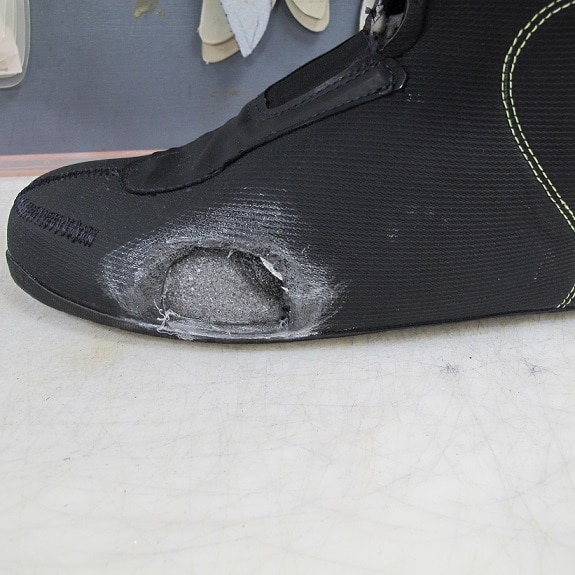
2- Your feet
There are many alternative medical solutions, but here is a 100% natural home remedy that was given to me six years ago, which I recommend to everyone after they’ve adjusted their shoes to address this problem. The results are excellent—almost miraculous. It’s also recommended as a preventive measure
Celery Foot (or Hand) Bath: Three times a day, soak your hands or feet for 20 to 30 minutes in:
– a hot decoction of celeriac with its stalks (about 250 grams per 1 liter of cold water, boiled for about an hour); After the soak, immediately dry the affected areas before wrapping them in a woolen cloth.
After three days, your frostbite will have miraculously disappeared. But the even more extraordinary aspect of this treatment (for which no rational medical explanation has yet been provided) is that there’s also a nine-in-ten chance that, going forward, you won’t suffer from frostbite again
Remember to moisturize your feet. In the evening after your shower or bath, take two minutes to rehydrate your skin and the pads of your feet. Trapped inside your ski boots all day long, they suffer more than your hands do in gloves.
Total Feet recommends PEDI MED cream from Pierre Fabre Laboratories
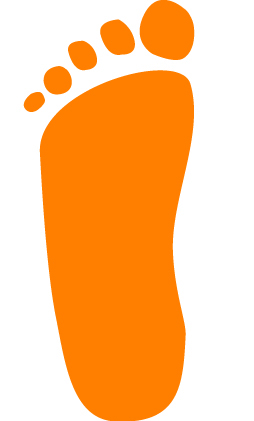
flat foot
This is the typical foot found in Scandinavian and North American countries. It is a flat foot with what is considered a weak muscular structure, which contributes to instability when bearing weight. The muscles are less toned and quite elastic. As our lifestyle has changed (becoming more sedentary), this type of foot has become more common among populations in industrialized countries.
The average size varies by geographic region: 42 to 45 for men, 38 to 40 for women
Its general shape is somewhat rectangular, with a relatively wide or even extra-wide forefoot
The heel is round, with a barely visible Achilles tendon
The ankle tends to turn inward; the medial malleolus “falls” toward the inside
The muscular structure is flexible; the plantar muscles are more relaxed than in a normal foot, with a relatively underdeveloped medial arch
This is the foot of the “sneaker generation,” which generally feels comfortable in shoes that do not constrict the forefoot area
Problems and their solutions
"My inside ankle bone hursts"
This is the main concern for skiers with flat feet. From the very first turns, the inner malleolus is subjected to pressure from the shell and the liner. When the skier engages the edge, the ankle rolls inward and downward. Many skiers in this situation choose a larger boot or have the shell reshaped around the malleolus, but the problem returns a few days later: since the foot isn’t stabilized, the ankle still collapses.
Solutions for pain in the medial malleolus:
1. First, have a custom insole molded to the shape of your foot. Total Feet will create an insole that is a negative mold of your foot’s shape, providing uniform arch support without restricting your foot’s natural movement when weight is applied to the inner side: this is achieved by taking a vacuum-sealed impression of your foot while standing on pressure pads. This insole will stabilize the rearfoot area, allowing the ankle to remain in its ideal position inside the ski boot.
2.expanding or grinding the shell to provide the necessary space for the medial malleolus. At home, remove the liner from the shell, slide your foot into the shell, and observe the contact points between the medial malleolus and the shell—“Ouch, Mom, it hurts!”
Custom-made liner or padding for your ski liner
In many cases, the ankle bone are no longer positioned in the space originally intended to provide ankle support. Having a custom-made liner crafted allows for complete customization of the boot’s interior, but these two preliminary steps are essential…
“MY FOOT HURTS ON THE OUTSIDE AFTER 3 HOURS OF SKIING”
As previously explained, a flat foot is what is known as a “weak” foot. In a ski boot, this laxity results in weakness in the muscular structure of the underside of the foot, preventing consistent support of the sole. The transverse arch (the one between the big toe and the little toe) is subjected to forces opposite to those acting on the ankle. The foot then twists like a corkscrew.
Just as with the medial malleolus, many people have had their boots widened, but the problem persists even when skiing with the lower buckles loosened.
Solution for forefoot pain caused by flat feet in ski boots
1- First, have a custom insole made that is molded to the shape of your foot. Total Feet will create an insole that is a negative mold of your foot’s shape, providing uniform arch support without restricting movement during inward foot pressure: this is achieved by casting the foot while bearing weight on vacuum-sealed foot-print cushions. This insole will provide uniform support along the entire length of the foot, preventing this twisting motion while skiing.
2- Adjusting the shell’s volume in the forefoot area. Shaping the forefoot area will relieve pressure on the outer arch and, most importantly, allow the transverse arch to function optimally inside the ski boot. Note: the goal is “only” to adapt the shell to the shape of your foot—not to turn it into a bathtub.
“I HAVE CRAMPS IN MY ARCH”
A flat foot is a weak foot, where the arch collapses. Due to its construction, a ski boot applies pressure to the foot as soon as you tighten the buckles.
This internal arch should act as a shock absorber and “feel” the terrain. Inside the ski boot, it is confined and subjected to the constraints of the rigid plastic shell and the liner, which is generally designed for a “normal” foot
Solution for arch cramps in flat feet inside ski boots
1- First, have a custom insole made that is molded to the shape of your foot. Total Feet will create an insole that is a negative mold of your foot’s shape, providing uniform arch support without restricting movement when weight is placed on the inner side of the foot: this is achieved by casting the foot while it is loaded onto vacuum-sealed foot-print cushions. This insole will provide uniform, individualized arch support along the entire length of the foot.
2- Adjusting the shell’s volume. A reshaping of the inner side to provide more space for the inner part of the foot. This adjustment is made by reshaping the shell on the inner side only. The higher-performance the boots, the more restricted the contact surface under the arch becomes to ensure a responsive boot. Certain types of flat feet “suffer” from this construction and must be adapted to the shape of the skier’s foot
Another problem for flat feet. Since the foot is weak, the instep is generally not very pronounced. Skiers often have to tighten the instep buckles excessively to feel lateral support without the boot being too large. This pressure compresses the top of the foot, impeding venous return and the function of the foot’s lifting muscles. This can lead to numbness, cold toes, and painful cramps on the top of the foot.
1-First, make sure you’ve chosen the right boot based on size, fit volume, and your foot shape. This is a common issue with beginner ski boots—they’re often designed for comfort with a very generous forefoot volume. Skiers, and especially female skiers, who want to improve while using this type of boot tend to tighten them too much in an effort to control their skis. It may be time to consider replacing this essential piece of equipment. TOTAL FEET offers a selection of boots suited to all foot types, regardless of skill level.
2-An insole with proper arch support. This accounts for 60% of overall comfort. The insoles are thermoformed under body weight, creating a “negative” mold of the foot
It will likely be necessary to adjust the rigid structure of the shell on the inner side
For optimal comfort, TOTAL FEET can then create a custom liner to ensure the perfect boot for your foot shape…provided that the shell itself is also the right shape and size for your foot structure
“MY LEGS SPREAD OUT IN AN ‘X’ SHAPE, AND I HAVE TROUBLE KEEPING MY SKIS FLAT”
This is a particular problem for people with flat feet: this muscle laxity affects the entire muscle chain of the lower limbs. Our role is to compensate for this deficiency and adapt the boots to this natural “deformation.” We’re talking about the alignment of the leg and feet
Most mid-range and high-end boots feature an ankle collar adjustment (canting) to adapt the collar’s profile to your body type.
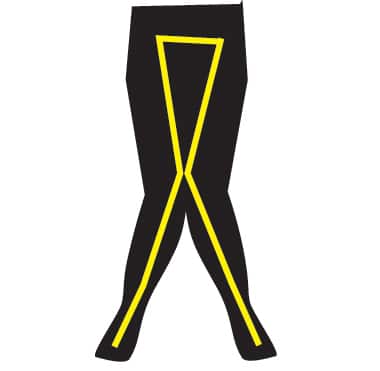
Solution for X-shaped legs in ski boots
1- First, have a custom insole molded to the shape of your foot. This insole will provide uniform arch support along the entire length of the foot.
2- Determine the precise canting adjustment.
Certain adjustments will be made using corrective elements directly on the insole at the rear of the foot
3- Boots can be individually adjusted by milling the bottom of the shell (for competition boots) or by adding beveled shims to the walking heel pads. These adjustments can be made in increments ranging from 0.5° to 3°.
High arched foot
A high-arched foot is a rigid foot with a small contact area. This contact area is limited to the base of the heel and the forefoot. The muscles of the foot are in constant tension. This muscular tension gives the instep a very distinctive shape: it is high and very rigid. The medial arch is very toned. The lateral arch is also very toned. Claw toes or hammer toes may be present (contraction of the muscles and tendons responsible for lifting the toes).
The transverse arch of the forefoot is generally convex, with excessive pressure under the metatarsal heads. This is typically a foot with very limited dorsiflexion due to tendon stiffness. It is the most difficult foot to fit with shoes: it is completely incompatible with so-called “normal” ski boot shapes, as well as with the mechanical stresses that a ski boot can exert on the foot—such as the buckles tightening across the instep… Putting the foot into and out of the boot
Problems and their solutions
The ball of foot is on fire after skiing for one hour
It’s impossible to make a turn properly; there’s always a urge to relieve the pressure on the foot. This is characteristic of the high-arched foot: some skiers take off their boots at the side of the slope, massage the ball of their foot, and head back out—only to experience another cramp
Due to its anatomical structure and muscle tone, the high-arched foot cannot withstand two types of stress from the ski boot:
Excessive load on the transverse arch of the forefoot and excessive pressure from the tongue on the instep
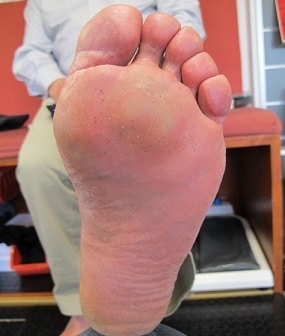
1-First, have a custom insole made that is molded to the specific shape of your high-arched foot. Total Feet has developed insoles specially adapted to the needs of high-arched feet in ski boots.
The materials used in the insole are specifically designed to address the stresses on the rearfoot (short medial arch), featuring soft foam and, if necessary, an element to stimulate the transverse arch in order to balance pressure on the forefoot during edge engagement. For people suffering from Morton’s syndrome (neuralgia typically occurring in the intermetatarsal space between the 2nd and 3rd toes), a pressure-relieving pad will be placed on the insole, combined with a widening of the forefoot area of the shell
2—Relieve pressure on the instep. It is absolutely essential to achieve even and consistent pressure across this area of the foot. Otherwise, tightening the buckles creates compression that cuts off blood circulation, leading to numbness in the forefoot and loss of sensation.
Fitting a custom tongue onto the existing liner (thermoformable INTUITION or injection-molded PU) Modifications to the shell are also an option (longer ratchets) to increase the internal height of the boot at the forefoot.
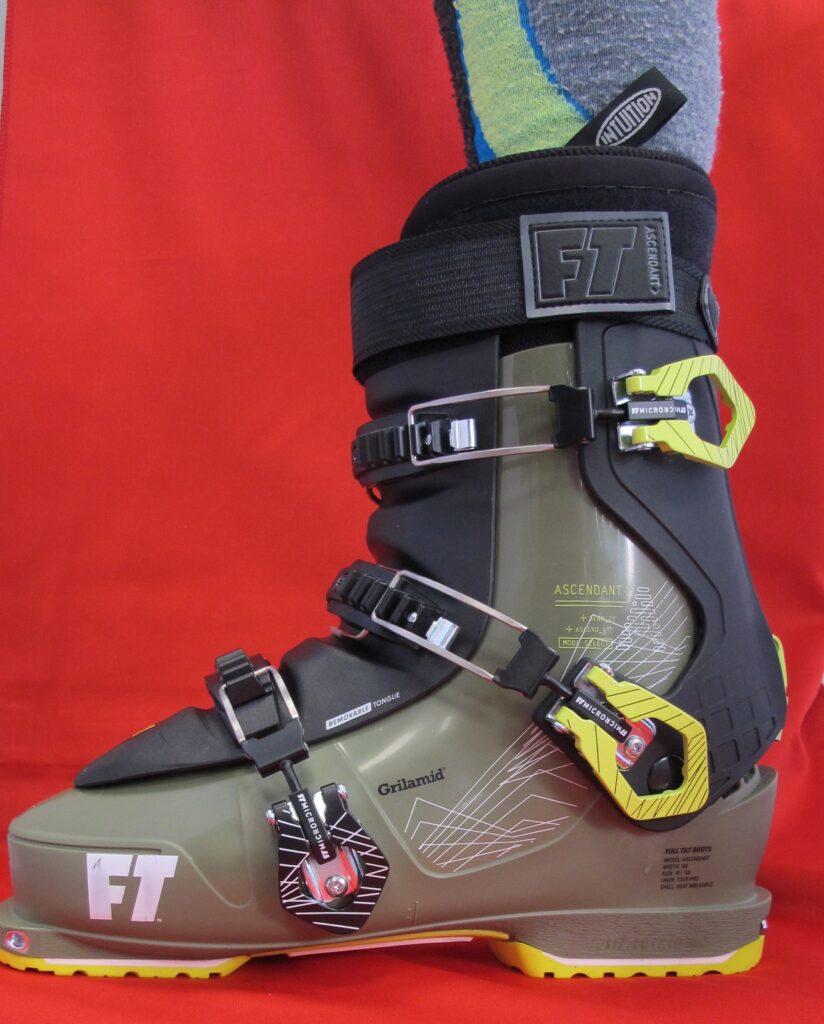
Changing boots may be worth considering. For high-arched feet, TOTAL FEET recommends three-part ski boots (boot shell, collar, and tongue), such as the FULL TILT. These boots provide even pressure distribution across the instep while maintaining a secure fit.
Custom thermoformable INTUITION liners will provide comfort and warmth.
3- Adjusting the shell’s volume in the forefoot area and along the outer edge of the foot. Shaping the forefoot area allows the transverse arch to function optimally within the ski boot. Note: You should “only” adjust the shell to the shape of your foot.
"my ankle bones hurt in my skiboots when edging"
Solution for Malleolar Pain in High-Arched Feet When Wearing Ski Boots
High-arched feet require the shell to be adjusted at the malleoli. These areas are generally outside the standard housing.
First, an examination of the boots (model and size) and a morphological assessment will determine whether the boot is “compatible” with your foot type.
If so, the shell can be customized to fit the shape of your ankle: grinding the shell and making slight adjustments will restore comfort and precise edging
“I HAVE TROUBLE KEEPING MY SKIS FLAT and parallell; IT FEELS LIKE MY LEGS ARE BOWED.”
Just like flat feet: this muscle tension affects the entire muscle chain of the lower limbs. This is referred to as leg alignment with the ski. Our role is to compensate for this deficiency and adapt the boots to this natural “deformation.” Most mid-range and high-end boots feature a cuff adjustment (canting) to adapt the cuff’s profile to your body type.
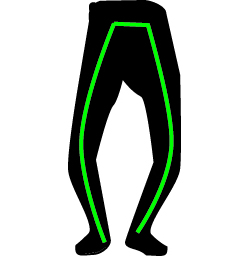
Solution for Bow-Legged Skiers
1- First, have a custom insole molded to the shape of your foot. This insole will provide uniform arch support along the entire length of the foot.
2- Determine the precise canting adjustment. TCertain adjustments will be made using corrective elements added directly to the insole at the rear of the foot
3- Boots can be individually adjusted by milling the bottom of the shell (for competition boots) or by adding beveled shims to the walking heel cups. These adjustments can be made in increments ranging from 0.5° to 3°
common issues
... and their solutions
“I'M IN AGONY BECAUSE MY bunions WHEN I WEAR SKI OR TOURING SKIboots”
Commonly known as HALLUX VALGUS, this is the most common painful deformity of the big toe, also known as a bunion. It is a deformity found primarily in older women with relatively flat feet that pronate. It can also be congenital; in such cases, it affects both men and women and typically causes pain starting around age 30. This type of foot cannot withstand lateral pressure on the big toe joint. In everyday life, with soft leather dress shoes, it is possible to find a compromise between comfort and ease, but in the case of ski boots—whether for downhill or backcountry skiing—the problem becomes critical and can even lead to inflammation.
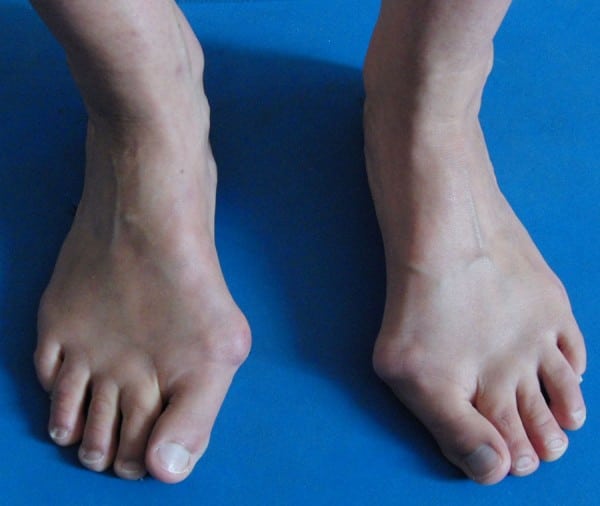
Solution for Hallux Valgus in Ski Boots
Total Feet can create a custom-made boot for you so you can ski
- First and foremost, select a shell that provides sufficient space throughout the forefoot area without compromising heel support or technical performance, depending on your skill level. This shell will serve as the foundation for the customization. Localized reshaping and milling of the shell to reduce lateral pressure on the joint.
- Creation of a “custom-made” liner—usually a thermo-molded type—with additional padding in the joint area to relieve all pressure on the ball of the big toe. This takes 2 hours and 30 minutes, but the result is well worth the effort…
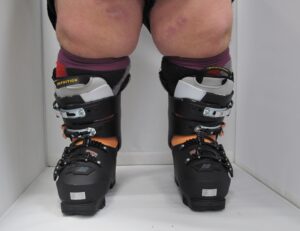
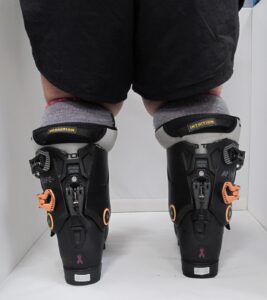
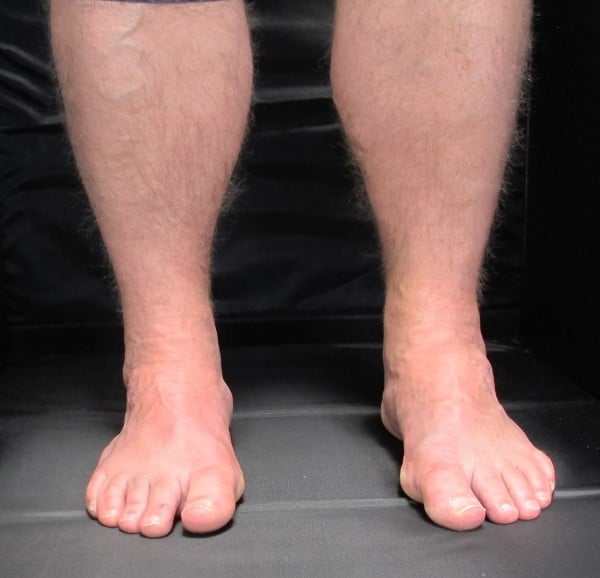
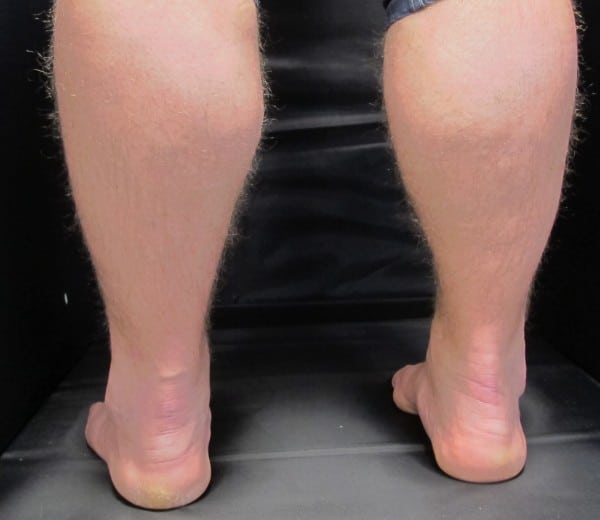
“I HAVE THICK CALVES, AND I HAVE A HARD TIME FINDING SKI BOOTS”
Since ski boots are often designed for normal feet, people with relatively large calves are at a significant disadvantage
1- Women: The structure of a woman’s calf differs from that of a man’s. It extends lower down, and its shape requires more space above the malleoli. Pressure on the sides can cause persistent pain, forcing female skiers to ski with the cuff buckles loosely fastened or open, or with boots that are much too large to accommodate their calves. The ankle is no longer supported, the foot feels unstable, and there is no real sense of control over the skis.
2- Men: This generally involves either a very toned calf or a large calf. In both cases, the process of adjusting the shell and liner is similar for both women and men. In this example involving a man—a young, athletic, well-built individual (175 cm, 100 kg)—he had a very strong instep, a very wide forefoot with a collapsed outer arch, and a short foot… size 40.5. More than 10 years ago, he had stopped skiing to take up snowboarding because his ski boots were a nightmare: He had to wear much larger boots (size 43–44 or 28.5) just to be able to fasten the top buckles… But: since the cuff was wider than his calf, this caused compression of the calf’s gastrocnemius muscles, pinching along the outer edges of his leg, and limited ankle flexion. In addition, there was compression on the instep and cramps along the outer edge of the foot: the “joys” of skiing—a real nightmare…
Shell
Work to widen the forefoot area of the shoe
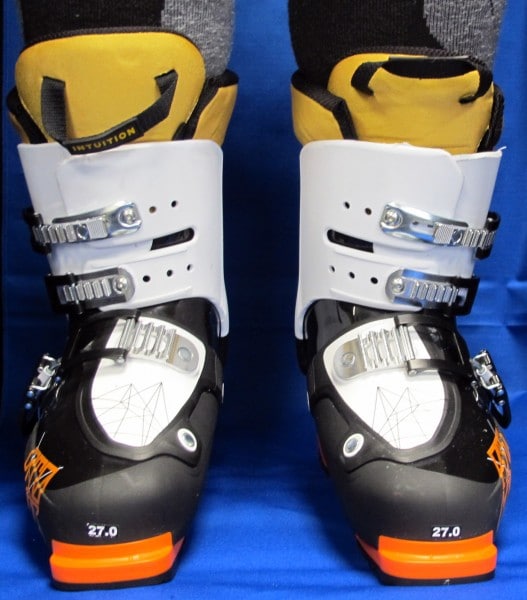
Collar: Reduced height around the entire circumference of the collar to allow more room for the lower leg (between 10 and 15 mm). Installation of XXL adjustable laces
liner
Molding an INTUITION LUXURY thermal liner. This liner conforms to the flared shape of the lower leg (like a Chianti bottle, but upside down).
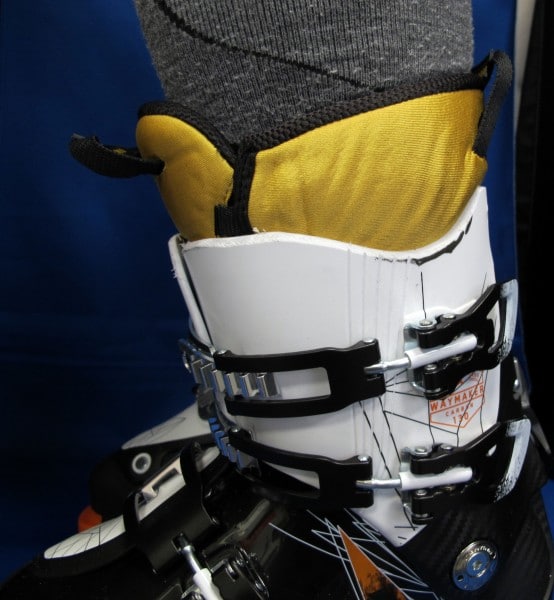
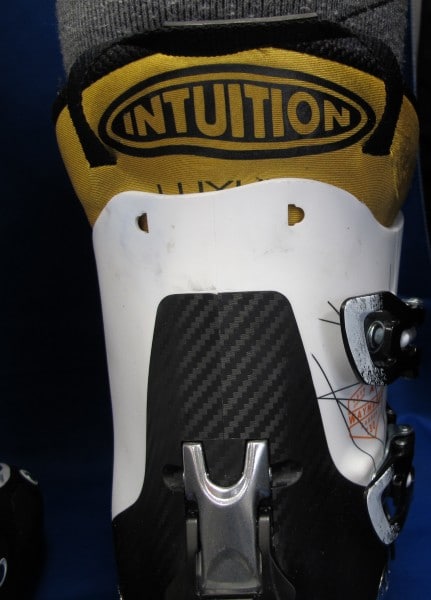
Duration of work: 2 hours 30 minutes to 3 hours
Cost: 850.00 to 1,200.00 €, depending on the choice of shell and time spent
The shell selection will focus on shells that are fairly roomy in the forefoot and heel areas, which can be easily removed at the collar. A high-quality plastic (PU) that can be modified without losing its mechanical properties for skiing.
“IN WINTER, MY FEET GET COLD AFTER AN HOUR OF SKIING—I CAN'T FEEL MY TOES ANYMORE.”
One of the main reasons women give up the joys of skiing, whether in cold weather or in the spring when the sun is shining brightly. But men are also affected in some cases
Note: This phenomenon is often due to two distinct causes:
1- Mechanical cause = Boots that don’t fit the shape of your foot or are much too large.
The boot’s shell restricts blood flow to your foot. This pressure limits blood circulation in your foot. The affected areas are either the instep (where the lower buckles of the boot are tightened), which reduces venous return to the heart, or the inner malleolus, which has the same effect on the blood flow to the foot (conflict with the inner malleolar padding of the liner or shell)
2- Natural Cause = The human body must constantly regulate body temperature to maintain a temperature of approximately 37.5° around vital organs (brain, lungs, liver, kidneys, and genitals). Exposure to our external environment (heat or cold) requires the body to constantly adapt: sweating in high ambient temperatures, or reduced blood flow to the extremities during low temperatures, particularly in winter. When it comes to ski boots, it’s normal to feel your toes becoming numb—you may have trouble sensing them—just as you might with your fingertips in ski gloves. In fact, the body reduces blood flow to the extremities (hands, feet, earlobes, and the tip of the nose). The small capillaries that supply blood to these areas constrict, preventing optimal blood flow that would provide warmth and vitality: you feel cold
This phenomenon is known in chronic cases as “Raynaud’s disease,” which is particularly common among women.
Nowadays, with advances in ski boot technology and various accessories (socks, heated insoles), a boot that’s well-suited to your foot shape and a few adjustments will allow you to rediscover the joy of the slopes, whether you’re a recreational skier, ski instructor, or ski patroller.
Solution to keep your feet from getting cold in ski boots
1- Choose the right boot based on your foot shape to avoid pressure points that could impede blood flow to the foot, leading to localized swelling or deformity. TOTAL FEET will select the shell best suited to your foot shape and specific characteristics. It will then be customized to reduce pressure on the instep or the inner edge of the heel.
2- A thermo-material insole will increase thermal insulation against the cold coming from the bottom of the shell
3- In some cases, having a Thermo INTUITION liner custom-made will enhance thermal insulation and foot compression, providing unmatched comfort in the toe area
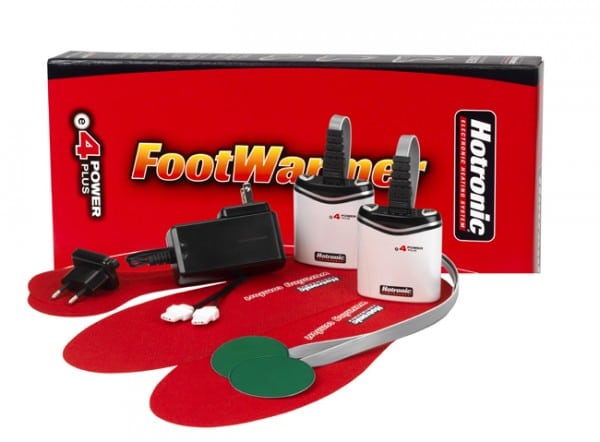
4- With technological advances in NiCd and lithium batteries, HOTRONIC heated insoles or LENZ heated socks will provide you with additional comfort while skiing. This is an essential comfort feature during the winter ski months—and well beyond for some people. Increased comfort, just like air conditioning in cars: you’ll wonder how you ever managed without it!
How does it work?
A heating element is installed under the toes. It’s powered by a NICADIUM battery attached to the boot or to your belt.
When engaging in outdoor sports in cold weather, the human body activates a defense mechanism to ensure the necessary blood flow to vital organs. The blood vessels in the extremities (hands, feet, nose, ears) constrict, reducing venous return. The heating element therefore keeps the tiny blood vessels in the toes open, promoting circulation—and thus warmth and vitality in the feet.
Is it really effective?
The heating element fits easily onto TOTAL FEET ski insoles.
HOTRONIC remains the gold standard in built-in footwear heating. I installed my first FOOTWARMER in 1979 in Canada, and I’ve remained loyal to the brand ever since.
Thanks to its reliability and performance, it’s the ideal product for ski instructors, piste patrollers, and anyone skiing for more than 8 hours in all kinds of weather.
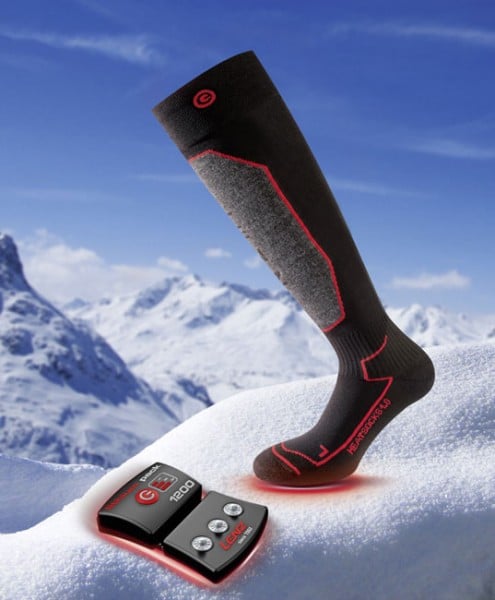
The LENZ Heated Sock
A true innovation. The heating element is built into the sock along with a lithium battery that clips onto the top of the sock: no more cables, external batteries, or broken connectors. The socks are machine-washable. You can purchase a separate pair of socks
This system is particularly well-suited for competitive skiers during long training sessions when they must wear ski suits, as well as during competitions in the winter months. Weekend skiers will love it for its ease of use
exceptionnal fitting solutions
How many people reach out to us in despair, saying: “You are my last hope”?
You have loved skiing for years, but a life-changing accident has left post-traumatic complications in your lower limbs. Today, stepping into off-the-shelf ski boots has become painful—if not impossible—despite countless attempts.
At TOTAL FEET, we are first and foremost a team of passionate orthopedic specialists. Our sole mission is to find THE solution that will allow you to return to the slopes, without your physical limitations holding you back.
Our Areas of Expertise:
Tibia-fibula fracture complications: Post-traumatic issues resulting from motorcycle, car, or mountain accidents, etc.
Ankle osteoarthritis & joint replacements: Post-operative alignment and adjustments following ankle prosthesis surgery.
Knee replacements: Complete rebalancing of leg alignment and foot-to-ski pressure distribution.
Forefoot deformities: Severe bunions (hallux valgus), claw toes, or hammer toes.
Atypical anatomy: Challenges related to large calves (lipedema, etc.).
This list is not exhaustive…
A few exemples
custon ski boot fabrication for a skier with lower-limb paralysis on a monoki
March 2023: We received an email inquiry from an individual who had contracted polio at birth, resulting in paralysis of the lower limbs. Despite this, their lifelong passion has always been to glide across the snow, no matter the cost.
Step 1: Initial Diagnosis & Assessment
First Consultation – June 2023: We conducted a comprehensive evaluation of the client’s current equipment. At the time, they were using custom carbon orthopedic braces designed to help distribute weight on their monoski.
Our Approach: To maximize both comfort and performance, we decided to start completely from scratch. Over the course of three dedicated appointments, we re-engineered the entire setup:
Boot Customization: Reconfiguring the outer shell to perfectly accommodate both the foot and the base of the carbon brace.
Custom Liners: Designing a custom, two-part liner featuring specialized closure systems and dedicated tibial support zones.
Orthotics (Footbeds): Crafting custom insoles to optimize load distribution and re-center the client’s center of gravity.
Monoski Integration: Engineering and mounting a custom canting plate onto the monoski to ensure flawless lateral balance.
Step 2: The Fitting Protocol & Custom Fabrication (Spread over 3 consultations)
Shell Modification: Selecting and configuring a dedicated ski boot shell structure, engineered to seamlessly integrate the base of the carbon brace, the custom liner, and the skier’s foot.
Liner Design: Fabricating a fully custom, two-part liner that incorporates optimized closure zones and reinforced tibial support.
Pressure & Alignment Optimization: Crafting custom orthotics to balance load distribution and stabilize the skier’s center of gravity.
Equipment Tuning (The Monoski): Engineering and integrating a specialized canting plate onto the monoski to perfect overall dynamic balance.
November 2023: Final validation testing and micro-adjustments.
January 2024: Back on the slopes at La Rosière—pure joy!
Project Pricing:
Custom made skiboots fitting : €2,500.00
Customcanting plate design & integration: €800.00
Ankle arthrodesis & fusion care:
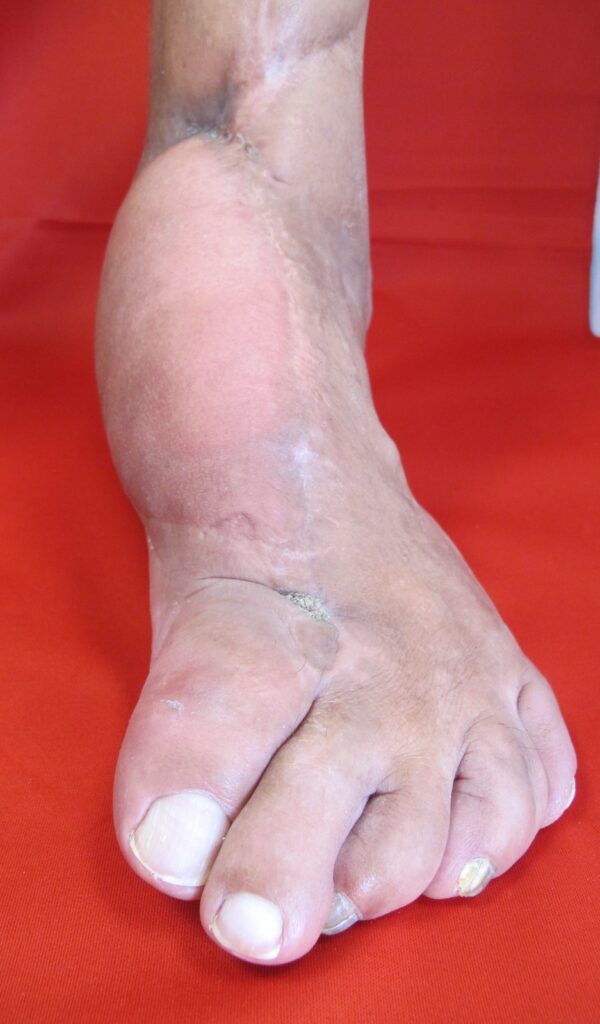
The Challenge
Left-side gait impairment (pronounced limp) and a fused ankle joint (ankle arthrodesis) resulting from a severe accident at age seven.
After countless unsuccessful attempts with standard ski boots and traditional bootfitting services, this passionate skier came to me with a crystal-clear goal: to finally ski with a flat, balanced stance, and above all, to ski completely pain-free.
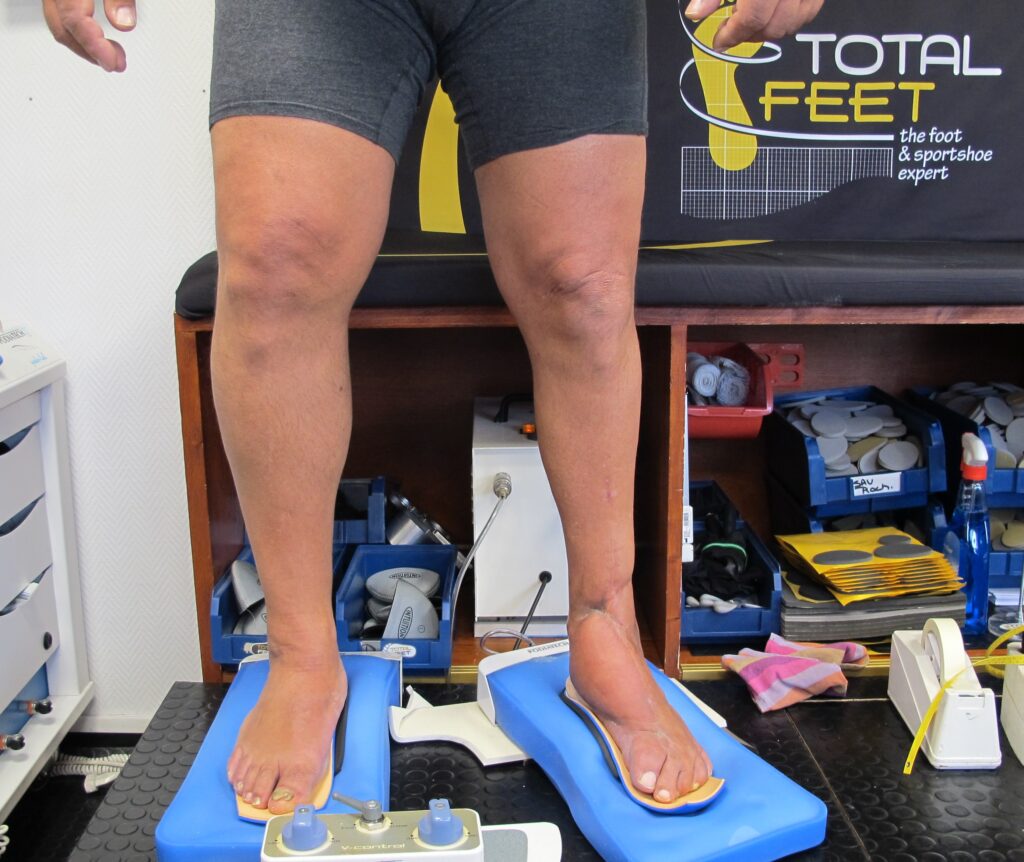
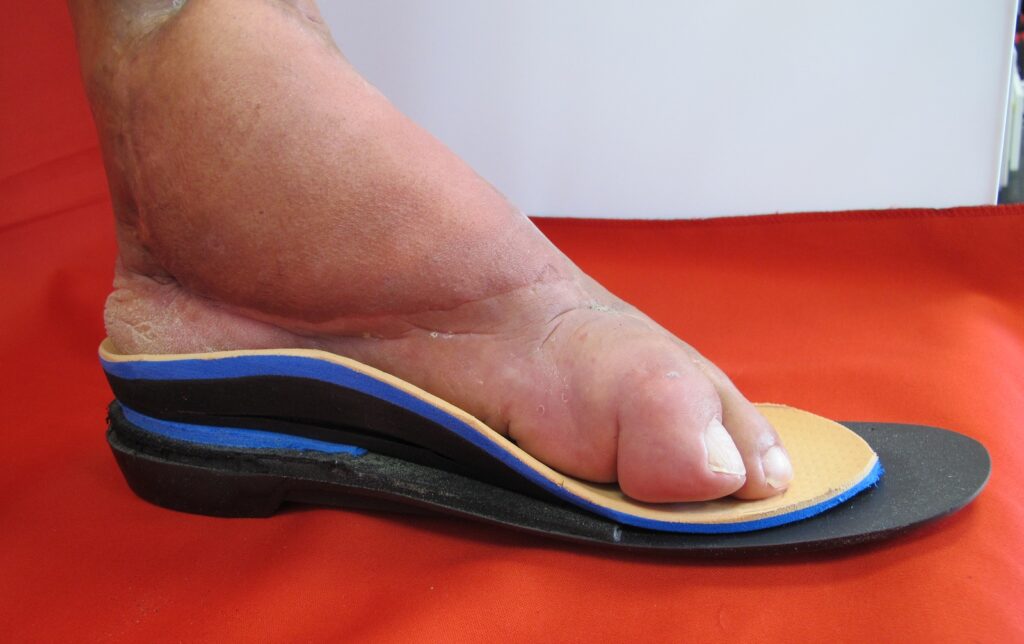
To address this complex anatomy and pathology, a highly precise, fully customized engineering process was required:
Comprehensive Assessment: Complete postural and dynamic analysis of the client’s gait and weight-bearing alignment.
Active Orthotic Insoles: Design and fabrication of bespoke orthotics incorporating the exact biomechanical corrections needed.
Leg-Length Compensation: Integration of a 30 mm custom heel lift (shim) between the insole and the boot board (zeppa) to perfectly balance the leg-length discrepancy.
Ramp Angle Modification: Adjusting the boot’s internal ramp angle (creating a negative lean) to successfully compensate for the lack of ankle flexion caused by the arthrodesis.
The Result
The outcome perfectly met both our initial expectations and our technical projections: today, he is skiing in Chamonix with a smile on his face, completely pain-free and in perfect balance.
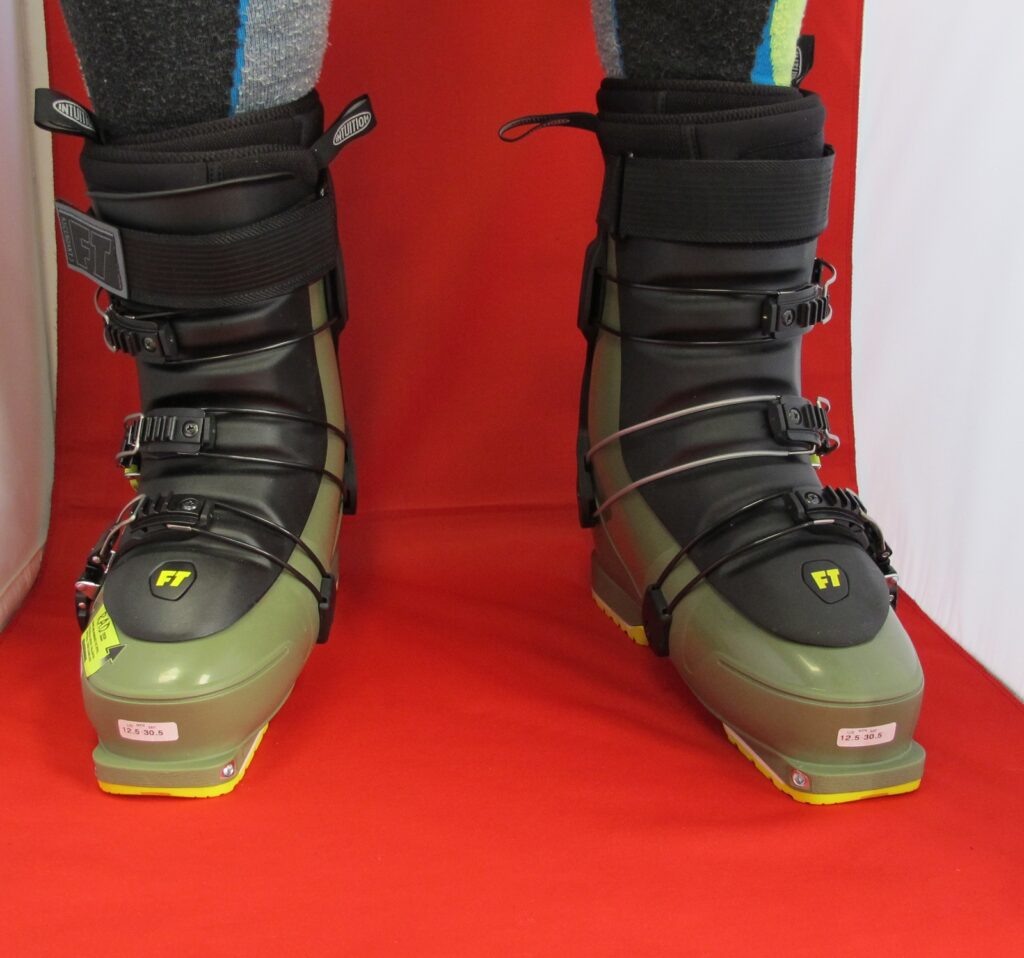
custom ski boot following a lisfranc amputation
imeline: July 2019 (Initial Assessment) & Autumn 2019 (Custom Fabrication)
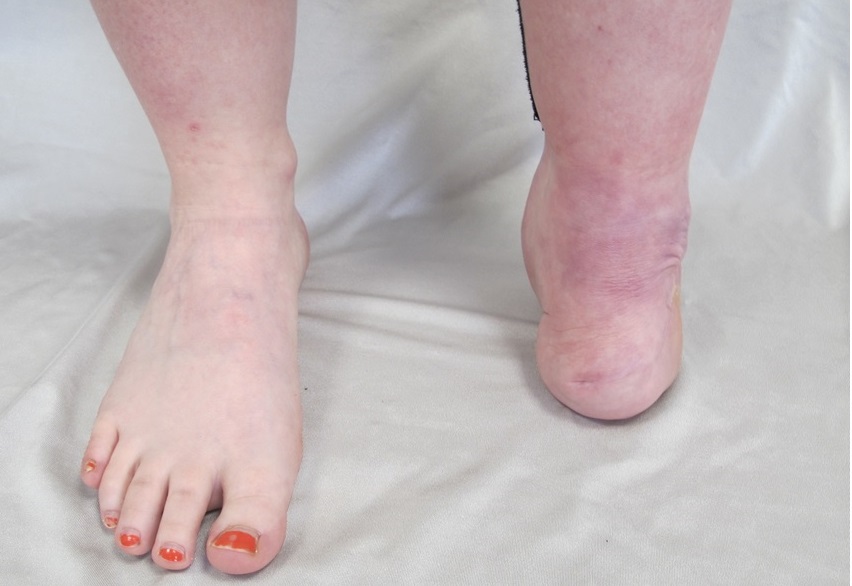
Client Profile: Active young woma . Left foot equipped daily with a cosmetic silicone prosthesis following a Lisfranc amputation (complete removal of the toes and metatarsal bones).
The Challenge
This client desperately wanted to know if it would ever be possible for her to ski properly again. Recommended to us by ski professionals in Valmorel, she scheduled a consultation after a highly frustrating and painful attempt using standard rental equipment:
Incompatible Gear: Attempting to slide either her silicone prosthesis or her residual limb alone into a standard rental ski boot proved to be completely ineffective and painful.
The Result: The boots were far too wide, offering zero ankle retention or stability. This led to a total lack of control and precision over the skis, causing unbearable pain after just two hours on the snow.
Our Approach: 4 hours of dedicated labor
To compensate for the complete absence of the forefoot while guaranteeing both exceptional comfort and precise steering control, we engineered a highly customized solution:
Shell Selection (Full Tilt Plush 90): We selected a 3-piece (cabrio) shell design, which is ideal for easy entry and exit for compromised feet or individuals with limited ankle flexion.
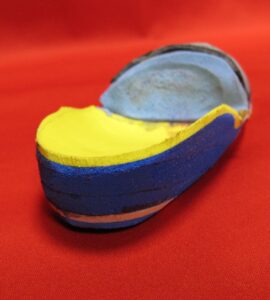
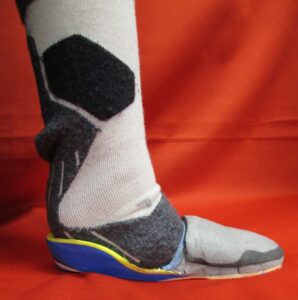
Custom Orthotics: Integration of a 20 mm custom lift beneath the left footbed to restore optimal forefoot pressure and correct rearfoot alignment.
Technical Forefoot Filler: Engineering a custom-shaped soft foam filler to occupy the empty space in the front of the liner. We integrated Sylomer® foam (an advanced shock and pressure-absorbing material) on all contact zones against the tip of the residual limb.
Thermo-Molding: Utilizing a thermoformable wrap (overlap) liner—eliminating a traditional tongue—molded directly over the entire assembly for a flawless, uniform wrap.
Postural Alignment: Modifying the cuff angle of the left boot to match the negative angle of her lower leg.
The Result
Thanks to this high-precision bootfitting process, this young woman regained uncompromising ankle retention, direct steering control over her skis, and, above all, the pure joy of skiing completely pain-free.
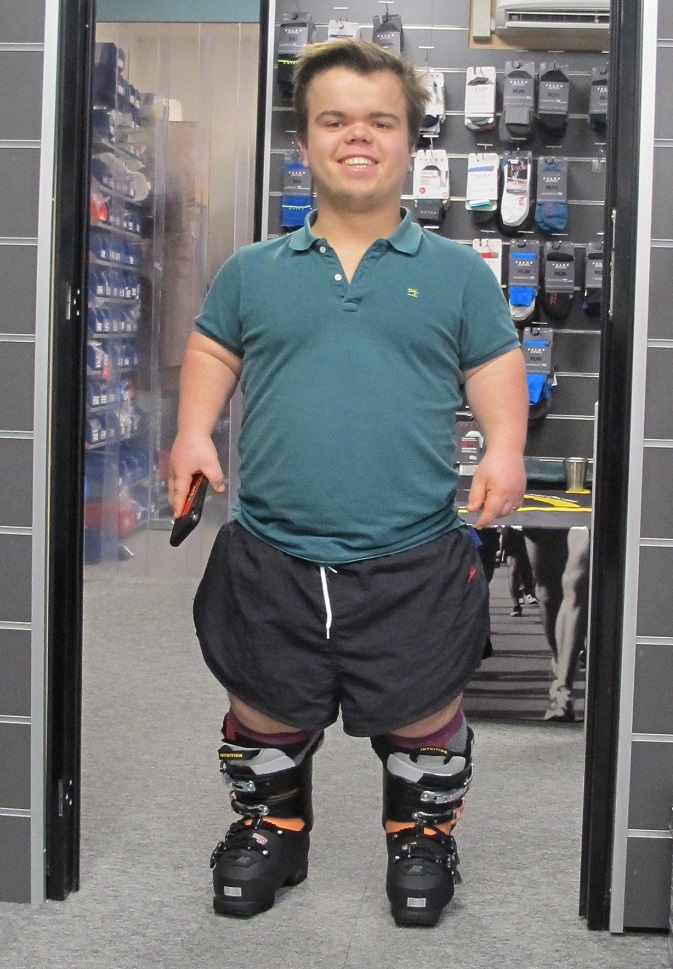
Custom Ski Boot Engineering for a young skier with dwarfism
Autumn 2021 (Initial contact) & January 2023 (Client feedback) Covid inbetween
Client Profile: An active young Belgian student.A passionate skier for whom the sport serves as a true “safety valve” and release.
The Challenge
We were initially contacted by the client’s father from Belgium. His son’s case presented an extraordinary anatomical challenge that made using ordinary rental ski boots an unbearable, painful ordeal:
Anatomy: Extremely short but exceptionally wide feet, combined with short lower legs and a very large calf circumference (43 cm).
The Goal: To design a solution that would deliver genuine support and retention without painful compression, finally allowing him to fully experience his passion for the slopes.
Our Approach (4 hours of dedicated labor)
Shell Modification (K2 B.F.C.): We selected a K2 B.F.C. shell equipped with an integrated walk mode, allowing us to customize the cuff and create a negative forward lean.
Lower Clog & Cuff Redesign: In our workshop, we systematically cut down and lowered the heights of both the lower shell (clog) and the upper cuff to perfectly match his unique lower-leg proportions.
Custom Orthotics: Fabrication of custom thermoformed ski-specific insoles to stabilize the footbed.
Bespoke Thermo-Liner: Custom molding a thermoformable liner with structural modifications made to shorten the height of the tongue.
The Result
January 2023: On the slopes during his university winter break—pure joy!
Project Pricing:
Custom Boot Fitting, Fabrication & Hardware: €2,000.00