common summer issues
Problems? not for us
We know this better than anyone.
Every season has its own set of problems! Whether it’s winter with ski boots or summer with hiking, the same complaints keep coming up:
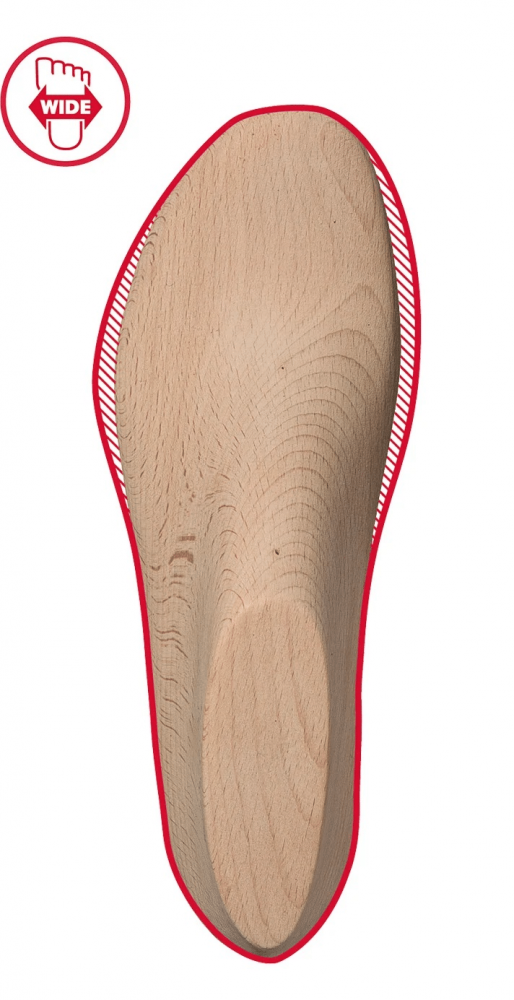
People with wide or very wide forefoot
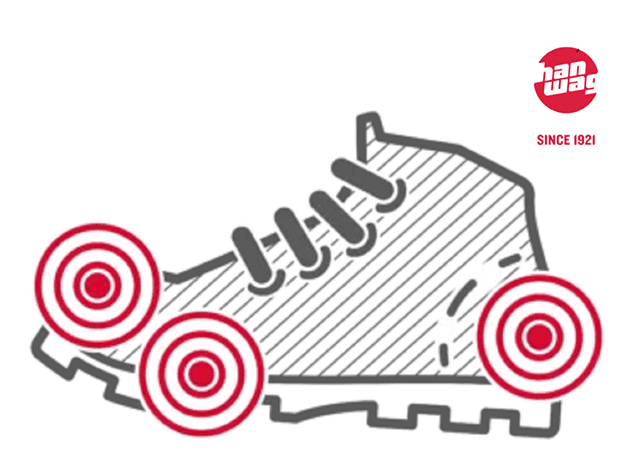
Whether for men or women, the width of the forefoot very often comes into conflict with the front of the shoe after 3–4 hours of walking: The transverse arch of the forefoot needs width in the forefoot area to allow the foot to move into the propulsive phase (forward stride). The forefoot feels “constricted” by the shoe. Your stride becomes less steady, and may even be painful.
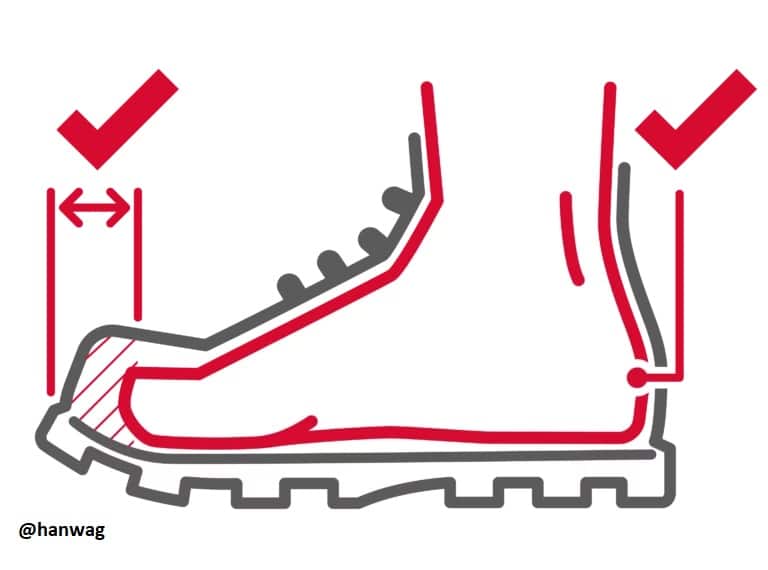
Many people deliberately choose shoes that are much too large to alleviate this problem. However, this merely shifts the problem: the heel is no longer supported in the back of the shoe, leading to a lack of ankle support and the development of blisters.
Solution: Choose your shoes carefully based on your foot shape
Take precise measurements of your foot—including length and width—while wearing your hiking socks.
TOTAL FEET has selected models from HANWAG that are specially made in a wide fit, as well as from Scarpa
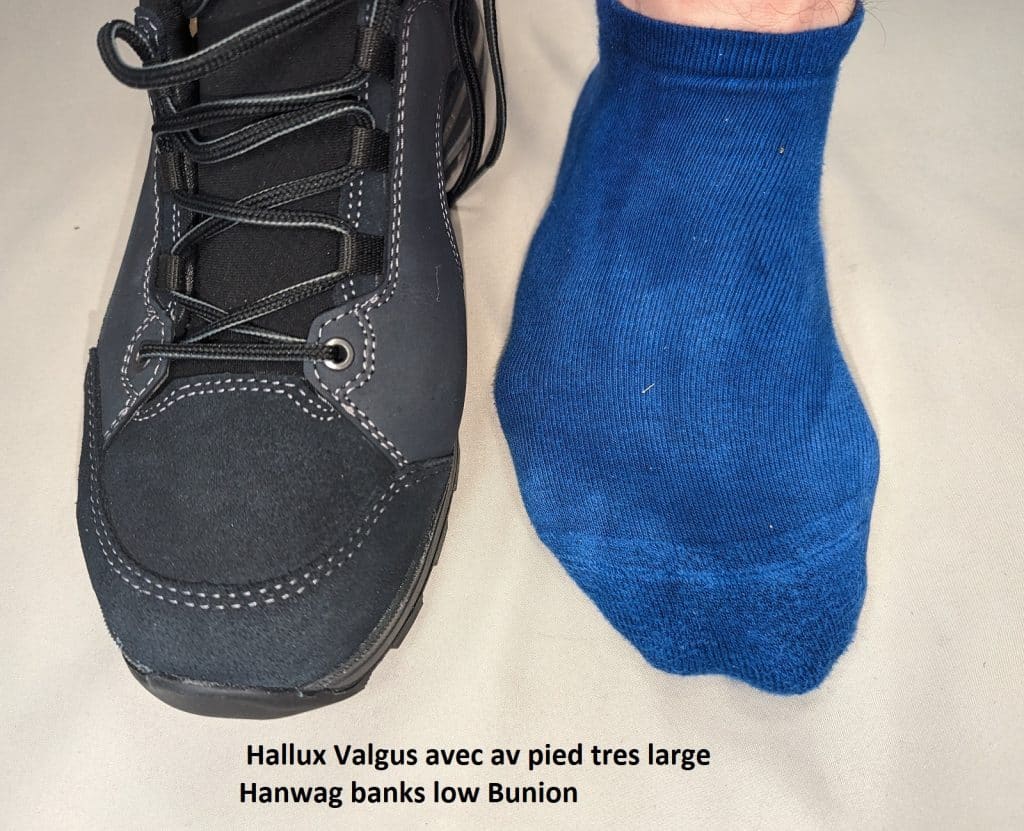
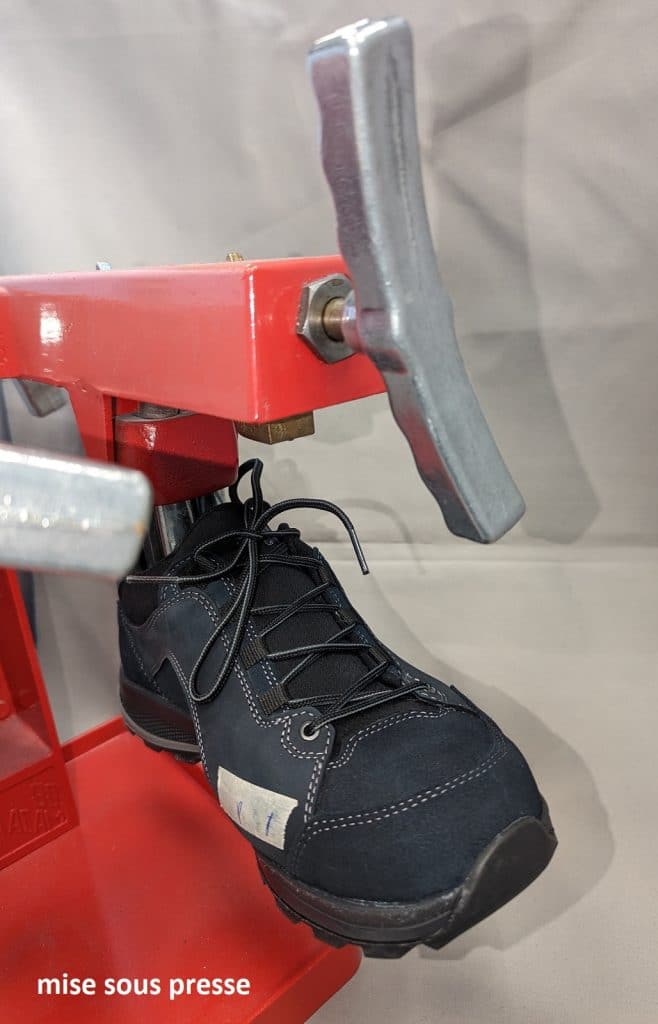
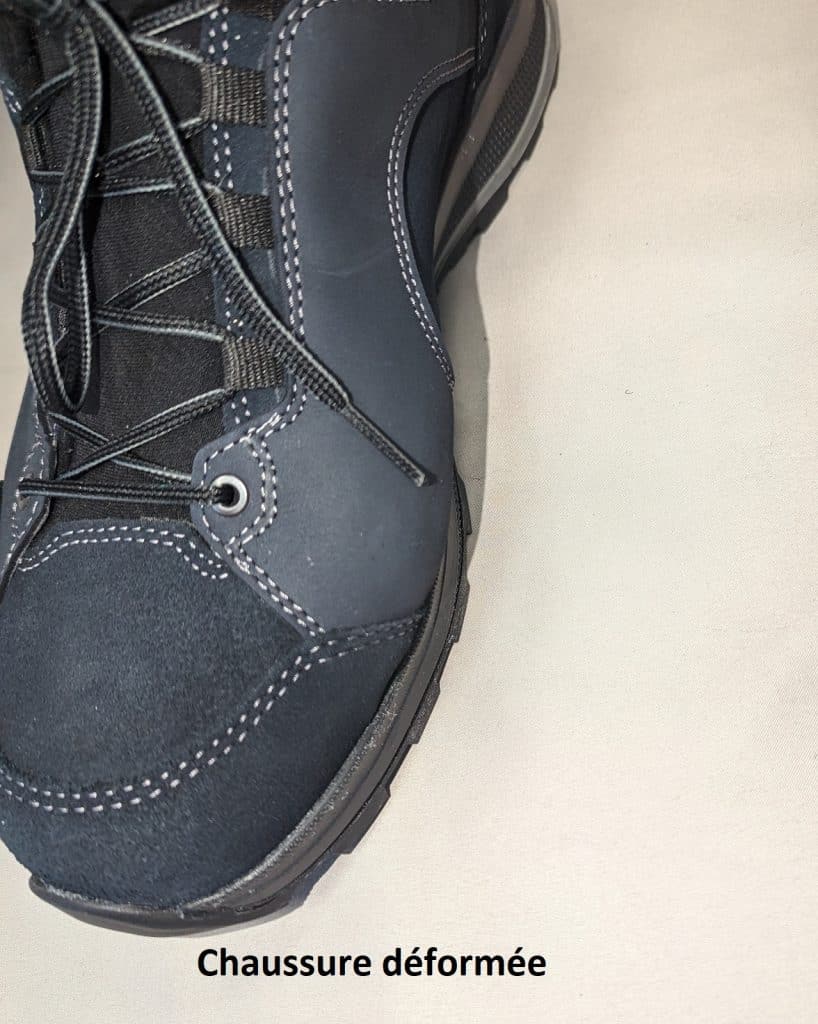
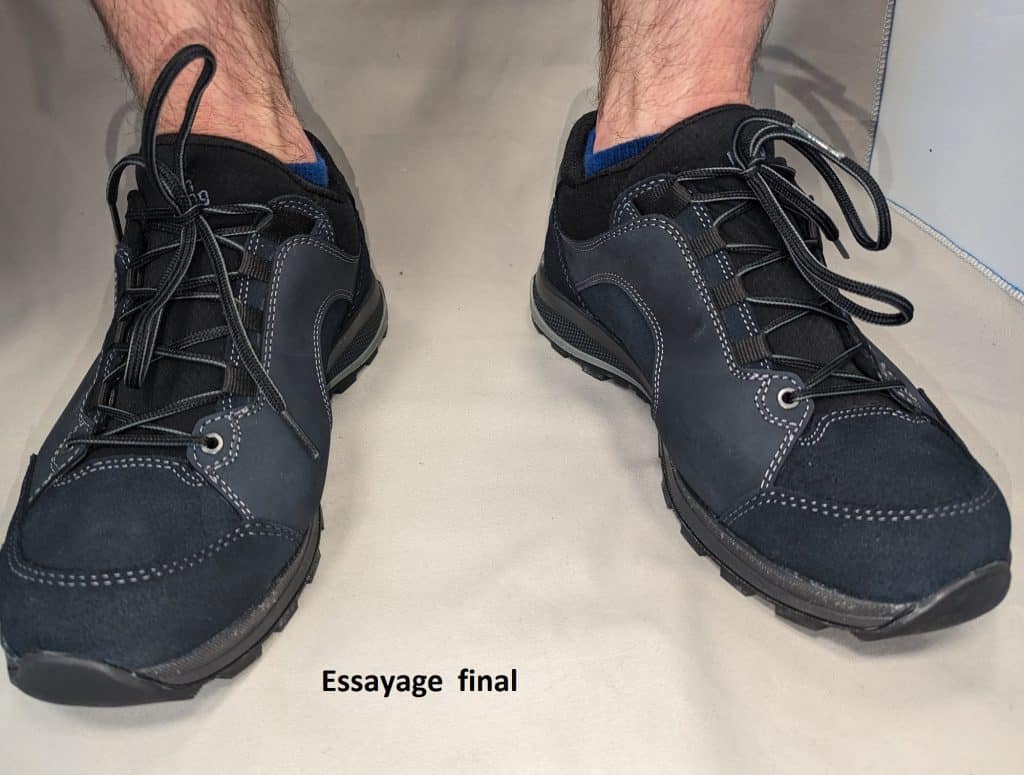
If necessary, our workshop is also specially equipped to increase the fit volume around the forefoot through reshaping. Simply leave your shoes with us under a press for 24 hours to mold them to your foot.
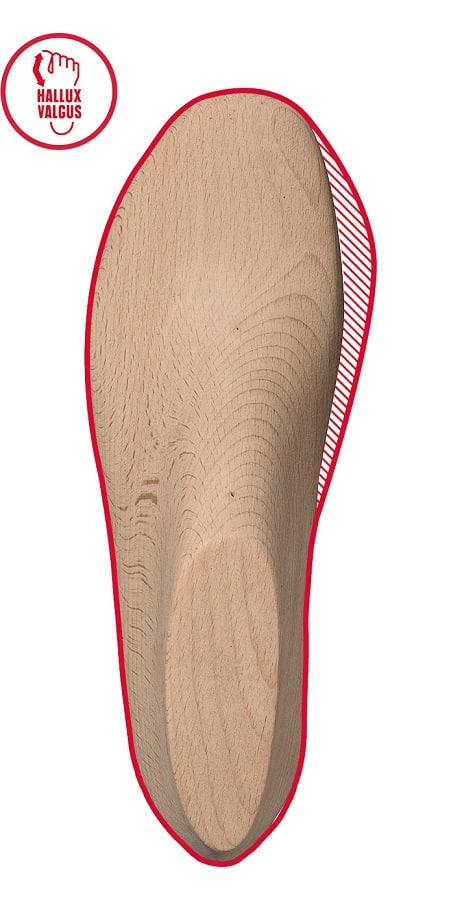
People with Hallux Valgus or bunions
Whether for men or women, the width of the forefoot very often comes into conflict with the front of the shoe after 3–4 hours of walking: The transverse arch of the forefoot needs width in the forefoot area to allow the foot to move into the propulsive phase (forward stride). The forefoot feels “constricted” by the shoe. Your stride becomes less steady, and may even be painful.
Many people deliberately choose shoes that are much too large to alleviate this problem. But this merely shifts the problem: the heel is no longer supported in the back of the shoe, leading to a lack of ankle support and the development of blisters.
Solution: Choose your shoes carefully based on your foot shape
Take precise measurements of your foot—including length and width—while wearing your hiking socks.
TOTAL FEET has selected models from HANWAG that are specially made in a wide fit, as well as from Scarpa that may be right for you.
If necessary, our workshop is also specially equipped to increase the fit volume around the forefoot by reshaping the shoe. Simply leave your shoes with us under a press for 24 hours to reshape them
People with Hallux Valgus
Whether congenital or acquired, this is a deformity of the first metatarsal bone that causes the big toe to deviate toward the outside of the foot. The structure of the forefoot is altered, with a protruding and deformed area at the big toe joint. Calluses form on the skin. This friction can cause inflammation of the bursa surrounding the metatarsophalangeal joint (bursitis), and the “bunion” becomes red, warm, and painful.
In short, depending on the type of shoe, walking can become difficult and painful. You need to find a walking shoe that provides enough room in this area without being too large for the rest of the foot.
Solution:
1- The first step is to relieve pressure on the first metatarsal. Very often, a custom orthotic with uniform arch support is needed to rebalance the pressure on the forefoot arch.
2- Choose a shoe that matches your specific foot shape in terms of size and fit.
3- The shoes will need to be broken in to relieve pressure on the affected joint. Our Shoelab workshop can customize the shoes to fit your foot shape
Total Feet recommends HANWAG hiking boots, which have designed models specifically for people with hallux valgus. These shoes are constructed with a specially wider last on the inner side of the shoe at the level of this joint. They are lined with leather on the inside and feature no seams in the bunion area. This prevents friction in that area. If necessary, our workshop can stretch the shoes to better accommodate this area.
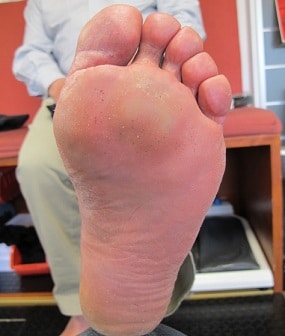
Burning sensation under the forefoot after 2 hours of walking, to the point of having to take off the shoes to rub the soles of the feet by the side of the trail
Whether for men or women, the width of the forefoot very often comes into conflict with the front of the shoe after 3–4 hours of walking: The transverse arch of the forefoot needs width in the forefoot area to allow the foot to move into the propulsive phase (forward stride). The forefoot feels “constricted” by the shoe. Your stride becomes less steady, and may even be painful.
Many people deliberately choose shoes that are much too large to alleviate this problem. But this merely shifts the problem: the heel is no longer supported in the back of the shoe, leading to a lack of ankle support and the development of blisters.
Solution: Choose your shoes carefully based on your foot shape
Take precise measurements of your foot—including length and width—while wearing your hiking socks.
TOTAL FEET has selected models from HANWAG that are specially made in a wide fit, as well as from Scarpa that may be right for you.
If necessary, our workshop is also specially equipped to increase the fit volume around the forefoot by reshaping the shoe. Simply leave your shoes with us under a press for 24 hours to reshape them
People with Hallux Valgus
Whether congenital or acquired, this is a deformity of the first metatarsal bone that causes the big toe to deviate toward the outside of the foot. The structure of the forefoot is altered, with a protruding and deformed area at the big toe joint. Calluses form on the skin. This friction can cause inflammation of the bursa surrounding the metatarsophalangeal joint (bursitis), and the “bunion” becomes red, warm, and painful.
In short, depending on the type of shoe, walking can become difficult and painful. You need to find a walking shoe that provides enough room in this area without being too large for the rest of the foot.
Solution:
1- First, you need to relieve pressure on the first metatarsal. Very often, a custom orthotic with uniform arch support is needed to rebalance the pressure on the forefoot arch
2- Choose a shoe that matches your specific foot shape in terms of size and fit.
3- The shoe will need to be customized to relieve stress on the affected joint. Our Shoelab workshop can customize shoes to fit your foot shape
Total Feet recommends HANWAG hiking boots, which have designed models specifically for people with hallux valgus. These shoes are constructed with a specially wider last on the inner side of the shoe at the level of this joint. They are lined with leather on the inside and feature no seams in the bunion area. This prevents friction in that area. If necessary, our workshop can stretch the shoes to better accommodate this area.
Burning sensation under the forefoot after two hours of walking, to the point of having to take off the shoes to
massage the soles of your feet by the side of the trail
Many people face this problem. Several factors may be to blame. Let’s go over them
1. Do you already have the proper shoe ?
The sole should be stiffer than that of a tennis or running shoe. If the shoe bends too easily at the forefoot, your foot has to work harder to compensate for this weakness in the shoe. This results in excessive strain on the transverse arch of the foot (under the metatarsal heads).
Do you have enough room in the forefoot area of the shoe? If not, your forefoot is too cramped, and the transverse arch cannot function normally—especially after 2–3 hours of walking (when the foot swells) or when walking downhill.
2. My shoes feel comfortable, but I have to take them off to massage my forefoot
A thorough examination of your foot morphology and a podiatric assessment are necessary. Generally, it’s necessary to have a pair of custom insoles made to rebalance the natural structure of your feet. The goal is to allow the foot’s three natural arches to act as shock absorbers and relieve excess pressure on the forefoot
TOTAL FEET offers
- A podiatric assessment, detailed foot measurements, and a shoe evaluation.
- Custom reshaping and adjustment in our SHOELAB workshop
- Custom insoles made based on the podiatric assessment for hiking boots
- Advice and assistance in selecting the most appropriate model from our range of hiking boots
loose heel & blisters
Why do we get blisters? What happens?
Almost all hikers are familiar with this common problem: What starts as a slight sensation of friction and warmth can quickly turn into a painful blister inside your socks.
Blisters can have several causes:
– Shoes that aren’t properly fitted to your foot shape and size
– Unsuitable socks, with creases or seams that rub
– Foreign objects—such as dust or sand—in your shoe or sock
– Friction caused by excessive sweating inside the shoe
TOTAL FEET offers
- A podiatric assessment, detailed foot measurements, and an examination of your current shoes
- Advice and assistance in selecting the most appropriate model from our line of hiking shoes
- Custom reshaping and fitting in our SHOELAB workshop
- If necessary, custom insoles made based on the podiatric assessment for your hiking shoes
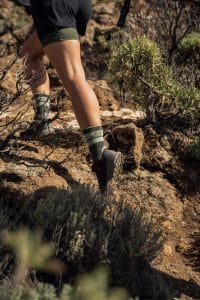
Pain along the shin and/or knee that occurs when walking downhill
The body rebels and cries out for help. It’s a mechanical problem that our skeleton and muscular system can’t compensate for. These conditions lead to a break from sports of varying duration, usually accompanied by physical therapy sessions. Here are a few recommendations to help prevent injuries during your outings
Pain along the shinbone
When hiking, the main risk factor for tibial periostitis is walking downhill. During downhill walks, the muscles are forced to absorb the energy generated by the impact with the ground. It is these heavy, repeated impacts that can contribute to the development of tibial periostitis. Several factors to consider: your height, weight, physical condition, the trail’s profile, and the ground surface—especially during descents
Your shoes: They should have a good tread pattern that ensures secure contact and traction when your foot strikes the ground. The sole should be stable and provide a secure feel, especially during descents
The midsole (between the outsole and the bottom of the foot) must provide cushioning when the heel makes contact with the ground (heel strike), but be stiff enough to ensure torsional stability along the entire length of the shoe: the foot can remain flat without rolling inward
The foot must be securely supported by the shoe’s upper without causing discomfort. This supportive fit helps better stabilize and guide the foot through the various phases of the gait cycle. Many people still experience this problem with sneakers or running shoes. Their midsole does not provide this stability.
If you use mountaineering boots with a stiff sole to accommodate semi-automatic or automatic crampons, the sole is far too rigid and may cause pain in the shins
For most trail hikes, low-cut approach shoes or lightweight trekking boots are recommended.
Using hiking poles during the descent is essential: we go from walking on two legs to four: 4 points of contact with the ground instead of 2 = better weight distribution and load sharing between the feet and the poles.
Another important point: the anatomical structure of your foot muscles.
In many cases, the foot needs custom support to create an internal arch for proper foot roll. The purpose of this insole is to stabilize the foot, allowing the bony structure of the foot and ankle to remain in a natural position while walking.
Knee Pain Just as with shin pain, the knee generally suffers from mechanical weakness. The same recommendations apply regarding both footwear and poles. However, special attention should be paid to your posture, and you should have a custom orthotic made to address your specific issue
Total Feet can create a fully custom thermoformed insole for your hiking boots. After a morphological and dynamic assessment—and the addition of corrective elements if necessary—the thermoformed hiking insole will effectively replace the original insoles in your boots
Blisters and Other Issues
How to hike blister free?
Your feet: taking care of your feet while hiking or trekking in the mountains blisters are often caused by moisture produced by sweat. It’s like when you get out of the bath and look at your feet. When your skin is soft, wrinkled, and sensitive, the ideal conditions for blister formation are present. You must therefore protect your feet and maintain your shoes
Steep ascents and descents, as well as carrying a heavy backpack, can also increase the risk of blisters. This is because they increase friction and rubbing inside your shoes.
Sweating is a normal function of the skin that allows it to cool down in case of excessive heat through evaporation. Sweating is a normal function of the skin and remains an excellent sign when it comes to the feet: the skin “breathes” and wicks sweat away from the skin’s surface.
However, the sweat must still be absorbed away from the skin without causing skin irritation between the foot and the inside of the shoe.
This is the role of the sock. Its function is essential; it must:
– Envelop the foot without creating creases or pressure points. Protect the areas where the foot comes into contact with the shoe (the sole and the toe box). These reinforced areas help reduce friction and last longer
– Be made of a material that can wick sweat away from the foot (terry cloth, whose microscopic fibers resemble tubes). Often a blend of synthetic fibers and wool
– Dry very quickly
COTTON “sports” socks should be avoided, even for a 1-hour walk: they trap moisture against the foot and do not allow it to escape. Cotton saturated with sweat promotes the formation of folds, which is the first step toward blister formation
hydrate your feet
Before heading out on a hike, follow this routine: Apply moisturizer to your feet and between your toes, then put on a clean, dry pair of hiking socks.
When you return from your hike, remember to moisturize your feet after your hike. They’ll thank you for it.
Leather or Goretex linning, which is the best for a blister free hike?
This remains the age-old debate: “Can you get by without a Gore-Tex membrane?” Here are a few points worth considering
- It often depends on the lining of your shoes. In this regard, classic leather linings are still unbeatable. “Leather is more flexible for the foot than fabric linings, functional membranes, or other waterproof materials. Leather is highly absorbent, which helps keep your feet drier.” A leather lining remains the foot’s best friend, especially for people who sweat
- Waterproof membrane systems are less suitable for summer travel and hot regions. To absorb and wick moisture away from hiking boots, there needs to be a significant temperature difference between the inside and outside. This isn’t possible in hot conditions, and waterproof membranes then become counterproductive. Sweat cannot escape from the boot. Moisture builds up inside. Feet become soft and are more prone to blisters.
- For most hikers, boots that aren’t completely waterproof are perfectly suitable. Classic leather boots treated with a PFC-free, silicone-based waterproofing product can easily withstand rain showers and puddles.
shoe care
Regardless of the style or construction, shoes should fit snugly around your feet and protect you from the elements. It’s essential to keep them in top condition so that the outer materials can breathe, fit snugly, and protect your feet.
After every outing, be sure to brush them with a shoe brush to remove dirt and dust.
For shoes with leather uppers, be sure to condition the leather. It’s your feet’ best friend and needs to stay supple. Products available include easy-to-use applicator pads.
Let your shoes dry in the shade at room temperature for 24–48 hours.
10 minutes of care for 8 hours of enjoyment. Keep that in mind.
Can we customize the fitting of your hiking shoes?
No matter what sport you’re into—mountain walks, hiking, trekking abroad, mountain running, expeditions, cycling, or trail running—your feet will be put to the test: routes with significant elevation changes, unstable trails and paths, and the need for confidence
Choosing the right shoe is essential, and tailoring your shoe to your feet is at the heart of our expertise
TOTAL FEET can customize your athletic shoes using shoe-stretching equipment specifically designed for soft leather shoes: stretching the forefoot and increasing volume in the toe area, such as for hallux valgus or width-related issues.
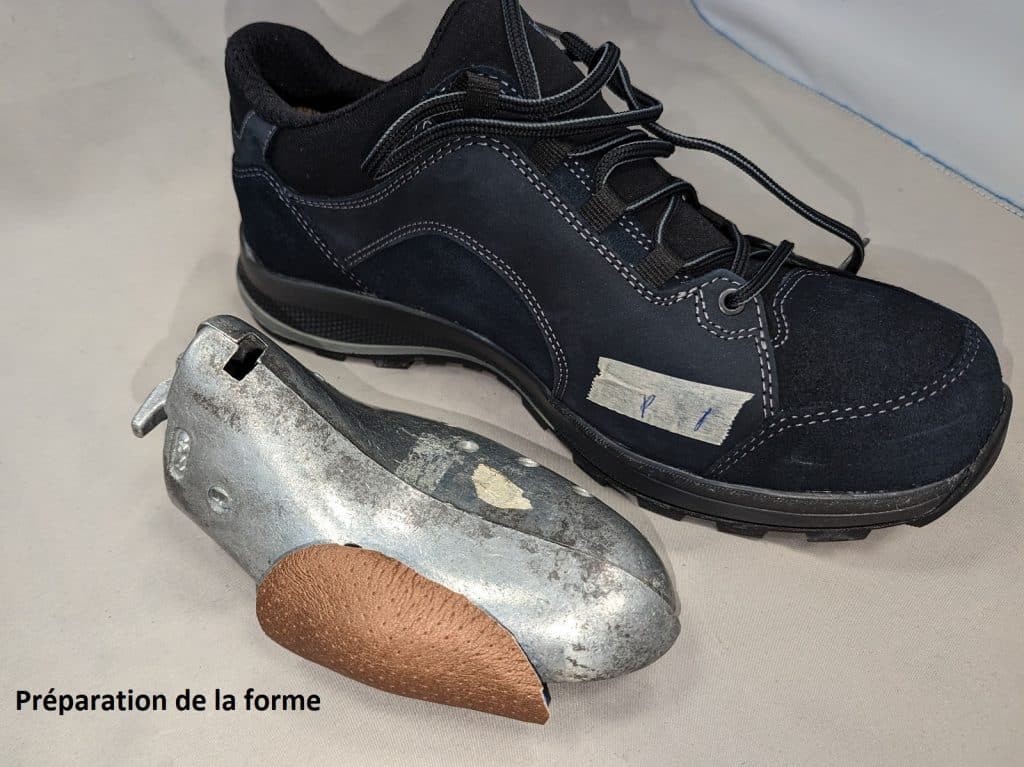
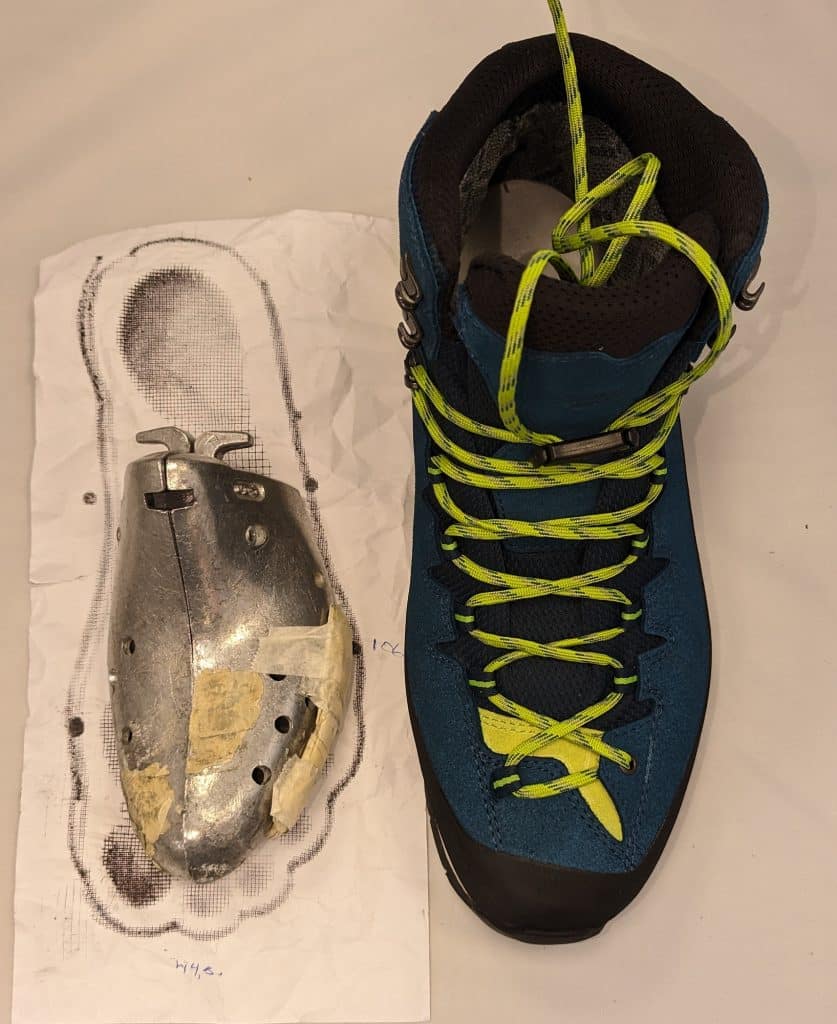
Our Shoelab workshop is equipped with tools specifically designed to adjust the shoe’s volume to fit the shape of your feet while preserving the integrity of soft materials such as leather or synthetic fabrics. These tools are well-known in shoe repair workshops. Over time, we have developed custom inserts and lasts to make these adjustments without compromising the performance of the shoe’s various materials or its breathability.
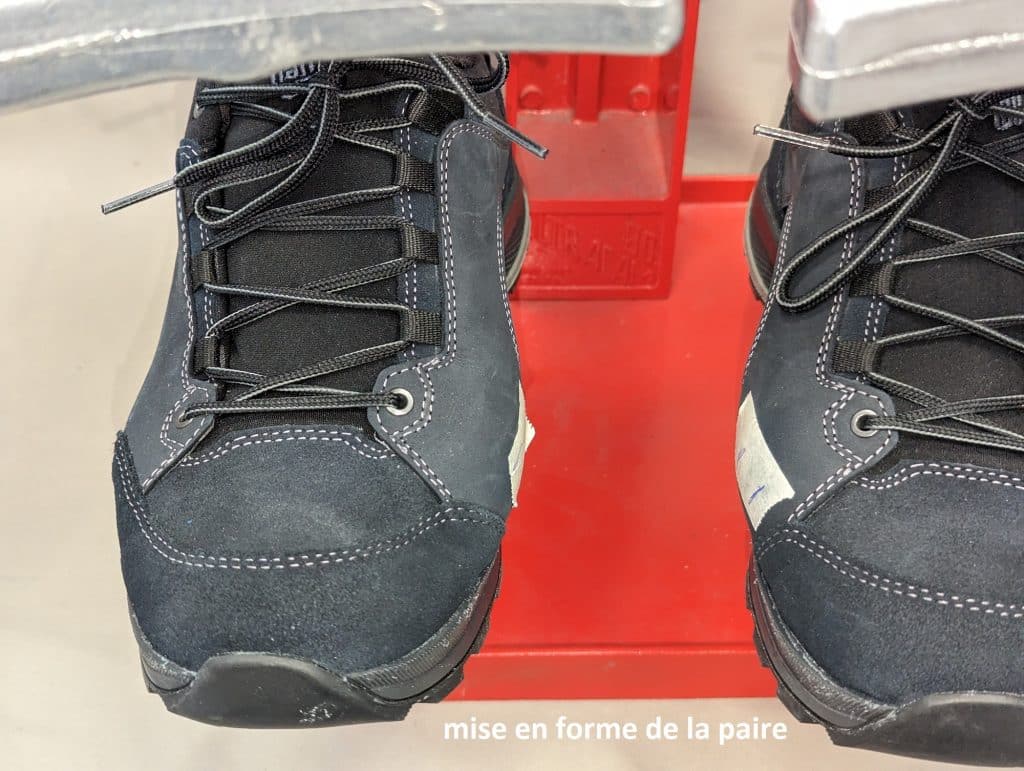
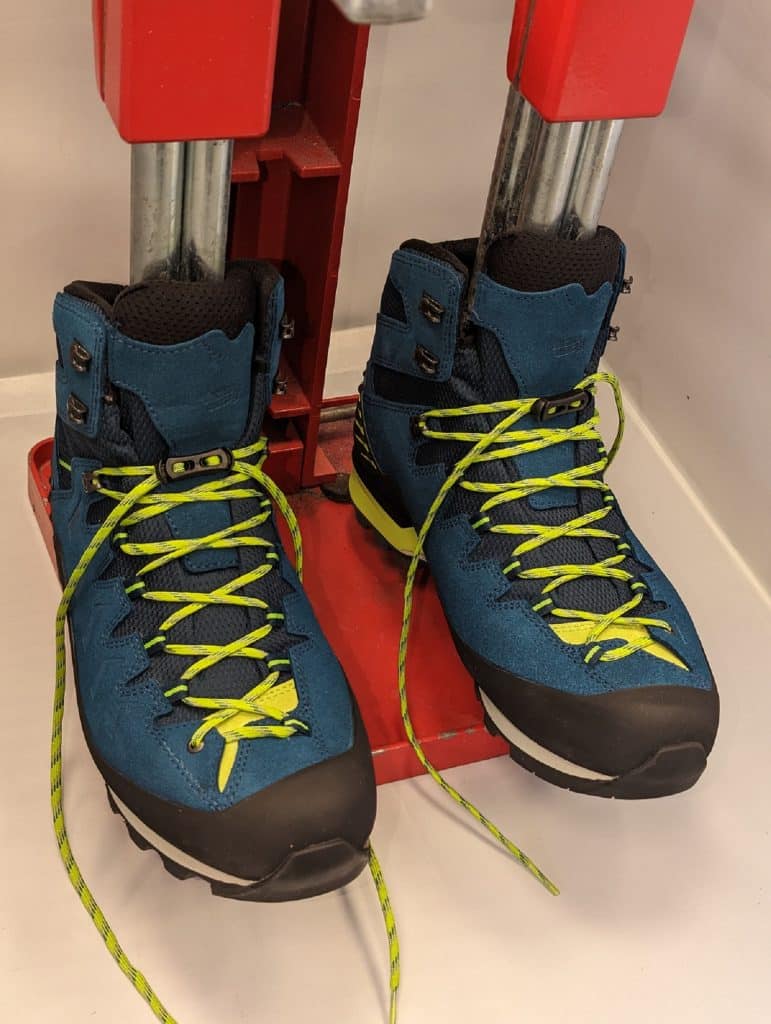
After reshaping and adjusting flexible shoes, they must remain on the press for at least 24 hours to allow the flexible materials to settle properly.
Our Shoelab for summer monutain, sports hoes
This is not the same process as for plastic ski boots: sanding, grinding, and stretching with hydraulic jacks.
Leather or flexible materials must be adjusted and stretched “gently,” while respecting the mechanical properties of the materials.
For which types of shoes?
Mountain boots, trekking boots, mountaineering boots, cycling shoes, and certain trail running shoes
How do you proceed?
When you make a purchase, we’ll work with you to ensure the size is correct and that the fit matches your foot shape. We recommend a “break-in” period for your shoes, involving short outings, so the shoes can mold to your feet.
If necessary, we can then fine-tune your fit through customization.
An appointment is required.
Please bring your usual shoes and socks.
We’ll measure your foot circumference while you’re wearing socks, assess any pressure points, and prepare the shoe last using shaping inserts.
The shoe(s) will need to be left under pressure for 24 hours.
Cost: €30.00 per shoe – or €60.00 per pair
Our sports orthotics
Just as in running, the foot’s structure must be able to perform its functions of shock absorption, guidance, and propulsion under all circumstances and regardless of the terrain.
Many problems tend to resurface, particularly during mountain hikes, due to the nature of the terrain (ascents and descents), the instability of the trails, and the stiffness of the shoes.
As with skiing, standard city insoles are not suited to the foot’s mechanical movements or the volume of mountain boots
TOTAL FEET has developed, over the years, fully custom-made, lightweight insoles featuring shock-absorbing materials and corrective elements specifically designed for mountain hiking
Insoles custom-designed for trekking or mountaineering will improve your foot comfort, increase precision when placing your feet on uneven terrain, and reduce foot muscle fatigue during long hikes.
The fitting process requires a 1.5-hour appointment, and the insoles are crafted right in front of you.
Prices range from €250.00 to €350.00, depending on the technique used.